Please note that this is my own personal blog and therefore the views and opinions expressed, although in no way intended to be controversial, are not necessarily those shared by my employers Abbotsbury Tourism Ltd. and Ilchester Estates . All photos are © Steve Groves unless otherwise credited.


Friday, 3 July 2015

Swannery Birding Highlights - May 2015

Birds Of The Month...

May is often a very productive birding month at The Swannery with May 'rarities' during my tenure including Black-winged Stilt (2012), Red-footed Falcon (2003), Alpine Swift (2003), Thrush Nightingale (1996), Black Kite (1994) & Collared Pratincole (1990), not to mention numerous scarce migrants. May 2015 however was rather uninspiring with no 'rares', 'scarcities' or 'patch ticks'. In fact even some relatively common migrants were in short supply, or lacking entirely... 

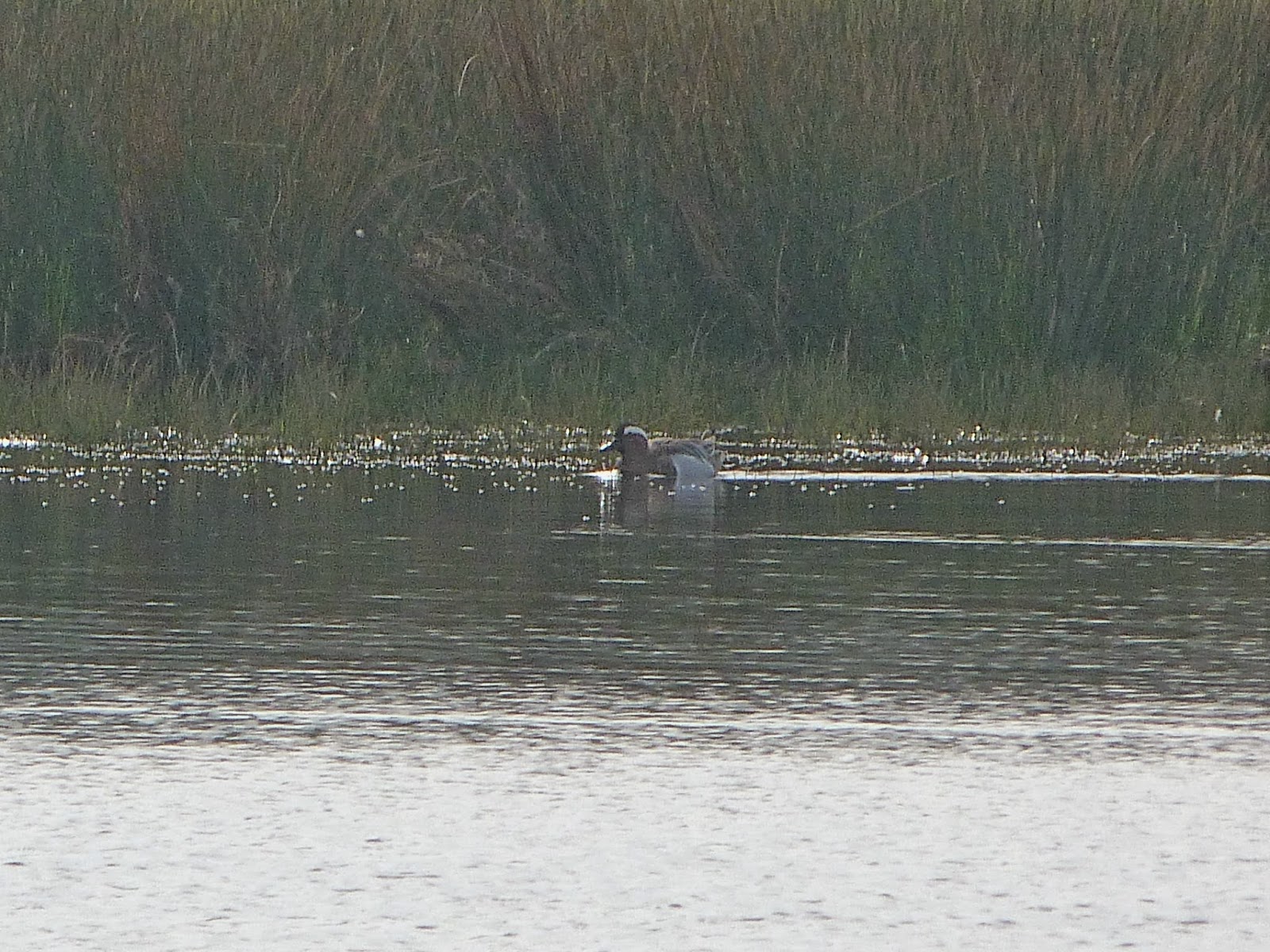
The best I could come up with were the pair of Garganey present on 'Meadow Pool' on the 15th & 16th ...


The pair of Garganey © Steve Groves

...And so with a near lack of head-liners this month it's on with the rest of the news...


Waterfowl...
Apart from the aforementioned  Garganey the only other notable sighting was a Greylag Goose present on the 22nd...  

The Greylag Goose © Charlie Wheeler

Lingering 'winter waterfowl' included Teal until the 5th, with a peak of eighteen on the 2nd; Shoveler until the 17th with a peak of three on the 15th and a lone drake Red-breasted Merganser on the 2nd.


Peak counts of the commoner breeding/over-summering wildfowl were: 

Mute Swan 510; 

Black Swan 2; 
Canada Goose 40; 
Shelduck 32; 
Gadwall 7; 
Mallard 120; 
Pochard 3; 
Tufted Duck 10.

Other Water Birds... 
There were no noteworthy species but peak counts of the commoner species were: 

Cormorant 20; 

Little Egret 12; 
Grey Heron 2; 
Little Grebe 1; 
Great Crested Grebe 25; 
Moorhen 6; 
Coot 54. 

Little Egret © Steve Groves

Great Crested Grebe © Steve Groves

Waders...
An Avocet was present on the 17th with it or another again on the 20th. Two pairs of Oystercatcher were nesting, with a third pair visiting from time to time. Unfortunately Lapwing have not nested for a number of years now and only a single was seen this month - arriving on the 7th and still present at the months end. Another lost breeding species is Ringed Plover and passage was poor with one on the 1st, two on the 13th and three on the 22nd. Whimbrel faired a little better with single figures being seen regularly through the month, with a peak of twenty on the 5th...

One of this month's Whimbrel © Charlie Wheeler

Only one Black-tailed Godwit was seen (on the 14th) and only two Bar-tailed Godwit (from the 15 to the 17th). The only Turnstone was seen on the 11th, whereas small flocks of Sanderling were present on the 13th (five) and on the 27th (eight). As to be expected Dunlin were far more regular but even so the largest flocks were only of ten on the 13th and again on the 22nd. 


One of this month's Dunlin © Steve Groves

Only two Common Sandpiper were noted, both on the 8th and only one Greenshank - on the 25th. There were no Redshank or Snipe.


Gulls...
An unseasonal Common Gull lingered until the 6th and the only Mediterranean Gull was a single first summer on the 11th and 27th. Otherwise there were just single figure counts of Black-headed Gull,  Lesser Black-backed GullHerring Gull and Great Black-backed Gull . 


The 1st summer Mediterranean Gull © Steve Groves

Terns...

Sandwich Tern passage tailed off early in the month with ten on the 3rd but only single figures thenceforth... 


One of this month's Sandwich Terns © Steve Groves

After their usual fickleness up to fifty pairs of Common Terns eventually settled on the Tern Island and  began nesting but apart from the aforementioned passing Sandwich Terns no other species were drawn in by there comings and goings.


One of the breeding Common Terns © Steve Groves


Raptors... 

Our former (now Radipole's) resident male Marsh Harrier made a brief return visit on the 8th and eight Red Kites drifted north-west on the 13th..


Three of the eight Red Kites © Charlie Wheeler

Another Red Kite lingered on the 15th but apart from an occasional Peregrine the only other raptors seen were the usual Buzzards, Sparrowhawks and Kestrels, not forgetting the very vociferous Tawny Owls.


'Near' Passerines...

The only migrants were the first Swifts of the year from the 3rd, with then single figures seen regularly. So no Cuckoos or Turtle Doves this spring! That just left the usual two resident Woodpeckers species  and the four resident Pigeon/Dove species for the months tally.

Passerines...

The first Whitethroats of the year arrived from the 2nd (with several then remaining on territory) and only the second and third Wheatears of the year on the 5th. 


My 1st Wheatear of the year (but The Swannery's 2nd) © Steve Groves

The 7th was very productive as the year's first Lesser Whitethroat, Garden Warbler and Yellow Wagtail all went into the log. The only other Wheatear and Yellow Wagtail of the month though were seen on the 8th. There were no further Garden Warblers however and only one other Lesser Whitethroat. Fortunately though both of the singing Lesser Whitethroats lingered on the periphery of the recording area (on the scrubby slopes of Linton Hill and Chesters Hill). Of the species that first arrived earlier in the spring, Sand Martins and Swallows continued to move through in single figures well into the month with one pair of the latter remaining to nest (with several elsewhere in the vicinity) but House Martins were in very short supply. Unlike Reed Warblers (many of which stayed to nest), Sedge Warbler sightings tailed off mid-month but at least one male remained on territory. Blackcaps and Chiffchaffs appeared plentiful but the last Willow Warbler of the spring was noted on the 8th (another lost breeding species). There were still no flycatchers, Whinchats or White Wagtails so it looks like we will have to wait for the autumn to get these on the year list! Of the residents most noteworthy were two singing male Cetti's Warblers and a Yellowhammer that was back on the former nesting area on adjacent Chesters Hill. 


This Goldfinch was just one of the many commoner resident passerines nesting this month 
© Steve Groves

And that's it for this month except to say sorry for the late post (a month behind!) but my laptop is kaput and the only other means I have to blog is using The Swannery PC and I don't get much time at work to do this! I shall endeavour to post my June sightings asap however!

Last but not least, thanks yet again to Charlie Wheeler  wheeler-photography for the use of his images. 


Tuesday, 5 May 2015

Swannery Birding Highlights - April 2015

Rarities...

There are two contenders for 'Bird Of The Month' for April 2015. The first was the Swannery's fourth (?) Black-winged Stilt that appeared on 'Meadow Pool' on the 3rd and lingered until the 10th... 

The Black-winged Stilt on one of the few occasions it showed from the hide with Teal 

An adult male, it frustratingly favoured the back of the pool and was thus out of view from the hide during most of its stay. It was however more reliably seen, albeit far more distantly, from adjacent New Barn Road.

The first official Abbotsbury record of this elegant wader was in July 1956 (which was presumably within what is now the Swannery recording area?) but unfortunately the next record, of a pair, seen by several observers in May 1987 was never submitted to the British Birds Rarities Committee and therefore the record does not stand. There were then no more official records until two appeared in the spring of 2012 - an adult male in April and a first year male in May.

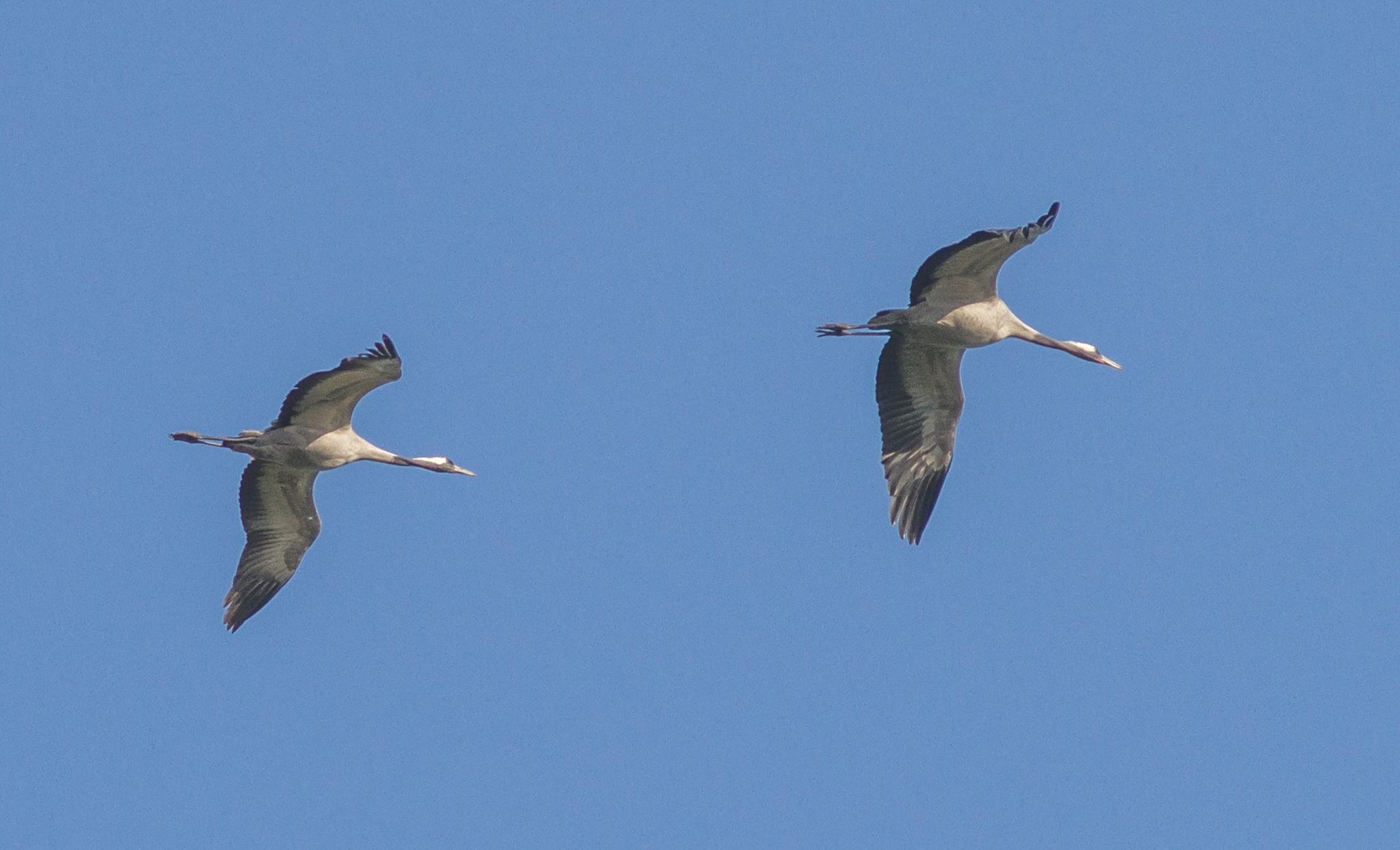
The second (or should that be second and third) contender(s) for 'Bird(s) Of The Month' were the two Common Cranes that flew over on the afternoon of the 20th. Now the species may not be a national rarity like the stilt but they are a county rarity and more importantly they were a patch tick for me! Now when 'The Great Crane Project' began releasing captive reared birds onto the Somerset Levels I feared that my first Swannery Crane would be one of these birds (or at least their progeny) but thankfully at present all the 'reintroduced' birds should be bearing big coloured plastic rings which judging from photos these two birds clearly seem to lack. Therefore they are 'innocent until proven guilty'... Kerching! No. 263 on my Swannery list!

Unfortunately rather than whiffling down onto 'Meadow Pool' they just kept going south-east but at least several other observers were then able to see them at various points on Portland and Weymouth and get those all revealing photos... 

Embedded image permalink
The Common Cranes captured as they flew over Southwell, Portland just over 30 minutes after my initial sighting at Abbotsbury   © Debby Saunders

The only previous Common Crane recorded at 'Abbotsbury' was in June 1983 but like the 1956 stilt it's not clear whether it was actually within the Swannery recording area. Also, within the parish of Abbotsbury but outside the Swannery recording area, were singles at Rodden Hive in June 2008 and November 2011.

Wildfowl...
The over-wintering Greenland White-fronted Goose finally departed on the 19th, which is actually a typical spring departure date for this Arctic breeding goose. The fact that it was 'lingering' late into the spring (which was clearly not the case) and it had a rather confiding nature led some to believe it was an escape rather than a wild bird, however this distinctive form breeds in an uninhabited part of Eastern Greenland and is protected on it's main wintering grounds in Ireland and Western Scotland, so they don't tend to be particularly shy. Also they appear to be extremely rare in captivity with a recent search on the internet showing none currently for sale whereas Lesser White-fronted Geese and Red-breasted Geese seem to be almost 'two a penny'!  

The Greenland White-fronted Goose with Mute Swans & a Coot © Steve Groves
The four Long-tailed Ducks also remained into April with the two drakes and a duck departing on the 16th whilst the remaining duck lingered until the 28th...


A 'record shot' of the lone female Long-tailed Duck © Steve Groves

The sole remaining Scaup (a drake) and its hybrid mate were last seen on the 5th (although there were a few erroneous reports later).

Incoming rather than outgoing were a pair of Garganey reported early on the 5th but they couldn't be relocated later in the morning. A drake on the 10th though was more cooperative...

A 'record shot' of the drake Garganey © Steve Groves

Back to geese and March's Greylag Goose just made it in to April being last reported on the 1st but in addition a pair were present on the 19th and five flew east on the 24th, whilst an Egyptian Goose added a bit of exotica from the 4th to at least the 10th...


The Egyptian Goose © Charlie Wheeler

Peak counts of the commoner wildfowl were: 

Mute Swan 420; 
Black Swan 2; 
Canada Goose 40; 
Dark-bellied Brent Goose 1:
Shelduck 40; 
Wigeon 10; 
Gadwall 6; 
Teal 60; 
Mallard 130
Pintail 50
Shoveler 20; 
Pochard 20; 
Tufted Duck 110; 
Red-breasted Merganser 8. 

Other Water Birds... 
Excepting the aforementioned Common Cranes there were no noteworthy species but peak counts of the commoner species were: 

Cormorant 4; 
Little Egret 20; 
Grey Heron 1; 
Little Grebe 1; 
Great Crested Grebe 40; 
Water Rail 1;
Moorhen 10; 
Coot 90. 

Waders...
Apart from the already mentioned Black-winged Stilt the only waders of any particular note were singles of Little Ringed Plover on the 6th and 15th. Peak counts of the commoner waders were: 

Oystercatcher 5; 
Lapwing 1; 
Ringed Plover 1;
Grey Plover 2:
Dunlin 18; 
Snipe 1
Bar-tailed Godwit 1; 
Black-tailed Godwit 1:
Curlew 1; 
Whimbrel 14;
Common Sandpiper 2;
Greenshank 4;
Redshank 1. 


Two  Dunlin on 'The Bund' © Steve Groves

Gulls & Terns...
The first Sandwich Tern of the year arrived on the 1st and there was a peak of sixty in the embayment on the 10th. The first Common Terns were seen on the 13th with ten around the tern island but this tally had not been bettered by the months end. Two Little Terns on the 24th were a surprise though, as since nesting has ceased on The West Fleet end of The Chesil they are no longer the regular visitor to The Swannery that they once were. 

One of the first returning  Sandwich Terns © Steve Groves
One of the first returning  Common Terns © Steve Groves

There were were no gulls of any real note but peak counts were: 

Black-headed Gull 30; 
Mediterranean Gull 1; 
Common Gull 5; 
Lesser Black-backed Gull 3; 
Herring Gull 40; 
Great Black-backed Gull 3. 

The only Mediterranean Gull of the month, a 2nd calendar year © Steve Groves

Raptors... 

Red Kite that flew east on the 21st was the only raptor of any note, in fact there wasn't even any Peregrine sightings this month but Buzzards, Kestrels and Sparrowhawks were regularly encountered of course. 

Land Birds - 'Non Passerines'...

There were no noteworthy species in this category, in fact there weren't even any Swifts by the end of the month, let alone a Cuckoo or Turtle Dove!

Land Birds - 'Passerines'...

There were no particularly rare or scarce passerines save maybe the Wood Warbler that performed well visually and audibly on the 20th. 'Less common' migrants also included a  'reeling' Grasshopper Warbler on the 13th, that was also glimpsed briefly  and singles of Redstart on the 16th, 19th and 20th...


The first of two male Redstarts this month, a female was also seen. © Charlie Wheeler

Chiffchaffs, that arrived in force at the end of last month were joined by good numbers of Willow Warblers from the 3rd , Blackcaps from the 6th, and both Reed and Sedge Warblers from the 9th but as yet there have been no Whitethroats, Lesser Whitethroats or Garden Warblers! Hirundines were rather few and far between at times but the first Swallows were seen on the 1st and both Sand and House Martins from the 3rd. Despite sightings elsewhere in Abbotsbury, the only Wheatear of the spring so far in the recording area was seen on the 4th and I didn't even connect with that one! Whilst we still await the first Yellow and White Wagtails, Tree PipitWhinchat and both Pied and Spotted Flycatchers!


Lingering winterer's that just made it into April were a few Jays and one or two Coal Tits, whereas the lone male Nuthatch also moved on having failed to attract a mate for the second spring running. Among the now less commoner residents several Cettis' Warblers, Treecreepers, Goldcrests and Long-tailed Tits are breeding with Ravens, Bullfinches, Skylarks and both Mistle and Song Thrushes in the near vicinity. Unfortunately though I haven't located any breeding Meadow Pipits or Stonechats as yet.

Thanks to Charlie Wheeler and Debby Saunders for the use of their images. 

Tuesday, 7 April 2015

Swannery Birding Highlights - March 2015

Wildfowl ...

The Greenland White-fronted Goose was seen regularly until the 11th when it flew off high to the  north-west. Remarkably though it returned on the 24th and was still present at the months end...

The Greenland White-fronted Goose in the meadow

A single Greylag Goose flew east on the 21st, with it or another present from the 25th to the end of the month. 

The Greylag Goose 
© Charlie Wheeler wheeler-photography

Following sightings in November and February a drake Green-winged Teal was present from the 6th to the 9th... 

The drake Green-winged Teal in the meadow.

The five over-wintering Scaup remained to the 8th but then four (two pairs) departed leaving just a single drake and its hybrid mate lingering to the months end. The four Long-tailed Ducks remained all month however.


The Long-tailed Ducks

Peak counts of the commoner wildfowl were: Mute Swan 46o; Black Swan 2; Canada Goose 20; Shelduck 50; Wigeon 10; Gadwall 10; Teal 150; Mallard 250; Pintail 50; Shoveler 30; Pochard 160; Tufted Duck 210; Red-breasted Merganser 60. 

Other Water Birds... 

There were no rarities but peak counts of the commoner species were: Cormorant 2; Little Egret 20; Grey Heron 1; Little Grebe 3; Great Crested Grebe 10; Moorhen 20; Coot 240. 

Waders...

Two Avocets on the 11th were the highlight...

The two Avocets on Meadow Pool

Peak counts of commoner waders were: Oystercatcher 6; Lapwing 3; Dunlin 1; Snipe 10; Black-tailed Godwits 4; Curlew 3; Redshank 25. 

Redshanks on Bum Point


Gulls...

There were no gulls of any real note but peak counts were Black-headed Gull 80; Mediterranean Gull 20; Common Gull 550; Lesser Black-backed Gull 20; Herring Gull 50; Great Black-backed Gull 10. 

Raptors... 

A Red Kite flew north on the 10th, whilst two drifted west on the 22nd - the same day that the regular male Marsh Harrier put in its only appearance of the month. A Barn Owl was seen one evening and a Peregine or two put in a couple of appearances, whilst Buzzards, Sparrowhawks , Tawny Owls and Kestrels were regularly encountered of course. 

Passerines etc...

There were no rare or scarce passerines but, among the common resident species, lingering winterer's (that sometimes stay to breed) included several Jays, one or two Coal Tits, several Cettis' Warblers, a Nuthatch, several Treecreepers, two Stonechats and a few Grey Wagtails. The only spring migrants seen were, not unexpectedly,  Chiffchaffs and they just about reached double figures by the months end. 

Chiffchaff © Charlie Wheeler wheeler-photography

So there were a few good birds in March but the first few days of April have already proved to be even better so watch this space!

Thanks to Charlie Wheeler for the use of a few of the above images. 

Monday, 2 March 2015

Swannery Birding Highlights Of The Winter........ 1st November 2014 To 28th February 2015

A Bit Of A Catch-up!

My last sightings post back in early November reported on the presence of three Dorset Rarities... An adult Greenland White-fronted Goose, a first-winter drake Green-winged Teal and a first winter drake Surf Scoter, the latter a first for The Swannery. So what happened over the winter?

Well the Greenland White-fronted Goose that arrived on the 9th November was still in the meadow with the Canada Goose flock on 28th February, although it did get around a bit over the winter, being seen as far west as West Bexington and as far east as Osmington (taking in both Radipole and Lodmoor RSPB reserves for good measure).

The White-fronted Goose of the Greenland race flavirostris
In The Swannery grounds in January

The Green-winged Teal was not seen again after the 9th November but an apparent adult drake was back on the meadow pool for one day only on the 10th February. Theoretically both sightings may have been of the same bird (that had completed it's moult wherever it had been in the intervening period), or equally as plausible perhaps is that they were two different individuals...

The drake Green-winged Teal (with Eurasian Teal) by the meadow pool on 10th February.

The Surf Scoter that arrived on the 9th November lingered on The Fleet at Abbotsbury just to the east of the Swannery recording area (and beyond any public right of way), until the 21st November. It could on occasions be seen very distantly from Helen Hide (within The Swannery grounds) by scanning down The Fleet  but on it's last day  it did the right thing (as far as my/the Swannery list is concerned) by appearing in the Swannery Embayment briefly. It then flew off down The Fleet and was not seen again. 


So what other wildfowl turned up over the winter? Well not surprisingly the single first winter  Garganey seen in early November was not seen again but the two first winter Long-tailed Ducks (present since October) were joined by a third in mid-November and a fourth in early December. All four of the latter were still present on the 28th February but they could be elusive at times, often splitting up and getting further down The Fleet and possibly as far as Portland Harbour, where the odd one was reported over the winter. 

The four 1st winter Long-tailed Ducks February 2015. Two drakes, two ducks. 
The drake 2nd from right is clearly more advanced in moult than the other drake 1st on left.

The four Scaup present in early November increased to five by mid-month and all five plus the regular female hybrid (that occasionally led to claims of six) are still present but they too sometimes get wanderlust and move further down The Fleet or over to Lodmoor RSPB.

The five Scaup (three drakes, two ducks) plus the Scaup x Tufted Duck hybrid (right)

The only other ducks of any note were a 'redhead' Goosander on a couple of dates in December and a drake Mandarin that was present for much of December and January...

The drake Mandarin Duck

Now just like the Mandarin many of the geese that occur at The Swannery are of naturalised introduced stock rather than truly wild birds. A good example being the four Egyptian Geese that flew north on the 1st December (but hopefully not the Greenland White-front). However Barnacle Geese occur in Britain both as a wild winter visitor and as a naturalised introduced resident. The wild population that breeds in Greenland and Svalbard winter predominately in Scotland and Northern England, with most that occur in southern England being of introduced stock. However a very wary flock of Barnacle Geese have been visiting the West Fleet regularly now for the last few winters and I believe that there's a good chance that they are genuine wild birds from the Arctic Russian/Baltic breeding population that predominately winter in the Low Countries and occasionally as far south as France. This winter The Fleet flock numbered up to fifty individuals and although they again favoured the Rodden Hive area they were seen in The Swannery meadows on the 23rd December and also made several flying visits on the 12th February. 

26 of the 50 strong Barnacle Goose flock that passed over several times 12th February  © Charlie Wheeler

I also fairly regularly encounter very wary Greylag Geese in late winter and early Spring and this year was no exception. Three dropped in briefly on the 11th February (which I unfortunately missed) and one spent much of the day way off across the embayment six days later on the 17th. Now much of the British population of Greylags are of 'feral' stock of course but many of the truly wild Scandinavian breeding population winter in Spain and South-west France so I can see no reason not to assume that these wary geese that we often see at this time of year are in fact truly wild birds on there way back north. 

The (wild?) Greylag Goose 17th February.

Peak counts of the commoner wildfowl were: Mute Swan - 664; Black Swan - 2; Canada Goose - 68; Dark-bellied Brent Goose - 50; Shelduck - 42; Wigeon - 340; Gadwall - 12; Teal - 1000; Mallard - 600; Pintail - 100; Shoveler - 160; Pochard - 400; Tufted Duck - 300; Goldeneye - 20; Red-breasted Merganser - 110.

So far then it has all been about wildfowl but that is because it was a pretty quiet winter here for most other species. The storms in early November that produced the Little Auk (mentioned in my last sightings post), did also bring in the second Shag of the year but that's about it. 

The four Yellow-legged Gulls present in early November (also mentioned in my last post) were not seen again, whilst the now expected influx of Mediterranean Gulls, peaking at around eighty at times, were the only other gulls of note.

Adult Mediterranean Gull acquiring summer plumage

Waders too were in short supply with the only noteworthy sightings being a Knot on the 9th November, a Woodcock on the 14th November, a Curlew on the 1st and 4th December, a Black-tailed Godwit on the 7th December, a Green Sandpiper on the 2nd February, a peak of eighty Golden Plover on the 6th February, a Ringed Plover on the 7th February, a Greenshank on the 8th February and a Turnstone on the 26th February. Peak counts of the commoner waders were: Oystercatcher - 5; Lapwing - 800; Dunlin - 5; 
Snipe - 40; Redshank - 11.

 Snipe

The regular male Marsh Harrier has been seen fairly frequently and an immature bird was also seen on the odd occasion, whilst a Barn Owl was the only other raptor of note.

There have been plenty of Kestrels around this winter (but few Peregrines).

There were very few passerines of any calibre either with winter finches and thrushes being in very short supply. Apart from the four Lesser Redpolls that were ringed early in November there was only one other seen all winter and even more surprisingly only one Siskin! Redwings and Fieldfares fared a little better with a peak of thirty of the former in November and eleven of the latter in December but none of either have been seen so far this year! In the reedbeds there have been good numbers of Reed Buntings, several Cetti's Warblers and at least two Bearded Reedlings have over-wintered but with fifty acres to forage in they have been very elusive. At least three Chiffchaffs survived to the end of January but the minor cold snap in early February caused them to move on and only one has been seen in the last few weeks. Goldcrests however seem to be doing well but there has been no sign of any Firecrests since the one seen in early November. 

There's been plenty of Stonechats around this winter too and there's only a few more weeks before hopefully they'll be joined by the first returning Wheatears!

As for other wildlife the highlight was an Otter that Swanherd Dave Wheeler was lucky enough to encounter in the stream...

The Otter that poked it's tongue out at Dave as it swam up-stream!  © Dave Wheeler
Unfortunately by the time I arrived on the scene it had vanished.

Thanks to Charlie and Dave for the use of their photos. I do plan now to post more regularly and possibly even weekly again. Thanks for bearing with me. 

I'll leave you with an image of one of the fantastic sunsets that we were treated to this winter...