Please note that this is my own personal blog and therefore the views and opinions expressed, although in no way intended to be controversial, are not necessarily those shared by my employers Abbotsbury Tourism Ltd. and Ilchester Estates . All photos are © Steve Groves unless otherwise credited.


Thursday, 19 November 2015

Swannery Bird News - October 2015

Highlights... 

Two Glossy Ibises flew in over Chesil Bank  at around 11 am on the 10th. They headed straight for a pool on the west side but just as they began to drop down they suddenly veered off west and just kept going. Previously that morning, at around 10.30, they were seen at nearby Lodmoor RSPB and then shortly after they were reported over Radipole RSPB. At the time of my sighting however I was unaware they were headed west and it was by pure chance that I was in the right place at the right time to finally add this species to The Swannery List!  Later in the day they were seen on the Axe Estuary (where they lingered into early November) and local birder Phil Abbott has kindly allowed me to use his photo of them at Colyford Common (as I failed to get a pic of them at The Swannery)...   


The Glossy Ibises at Colyford Common © Phil Abbott

Following on from last month's Cattle Egret sightings there were further sightings of a single on the 1st and 6th...

The Cattle Egret on Meadow Pool on the 1st

In what proved to be a very good autumn for Yellow-browed Warblers nationally... up to four individuals were seen or at least heard at The Swannery with singles on the 1st, 15th, 22nd and 31st. Unfortunately none gave themselves up to the camera so below is a pic of one that was trapped, ringed and released at The Swannery back in October 2012...


Yellow-browed Warbler October 2012

And now the rest of the news... 


Waterfowl...

A first winter Long-tailed Duck arrived on the 30th and the adult drake Scaup was at last joined by another on the 27th when a first winter bird arrived. All three were still present on the 31st.

Two firsts for this autumn were a Dark-bellied Brent Goose on the 1st and a Red-breasted Merganser on the 18th but both were the only ones of the month.


The peak counts of the commoner wildfowl were: 

Mute Swan 720; 

Black Swan 2; 
Canada Goose   240; 
Shelduck 1; 
Mandarin 1 (the white escape still);
Wigeon 460;
Gadwall 6; 
Teal 800;
Mallard  635; 
Pintail 250;
Shoveler  50;
Pochard 220; 
Tufted Duck 260.


Moulting drake Pintail

Other Water Birds... 

Apart from the aforementioned Glossy Ibises and the Cattle Egret there were no noteworthy sightings and peak counts of the commoner species were: 

Cormorant 20; 
Little Egret 3; 
Grey Heron 1;
Great Crested Grebe 30; 
Little Grebe 24;
Moorhen 20; 
Coot 1100.

Waders...

Most noteworthy was a Jack Snipe on the 11th but also of note were sightings of Golden Plovers... with one on the 23rd and thirty on the 27th; Grey Plover... with one on the 6th; Knots... with singles on the 10th, 28th and 29th; Black-tailed Godwits with three on the 2nd and singles on the 4th and 21st; Common Sandpipers with one on the 6th and two on the 11th and Turnstones with six on the 2nd. 

Peaks counts of the commoner species were: 

Lapwing 60;
Dunlin 4; 
Snipe 3. 

Unusually not a single Redshank was seen.

The three Black-tailed Godwits on the 2nd

Gulls...

The only gulls of note were single first winter Yellow-legged Gulls on the 5th and the 12th. 

Peak counts of the commoner species were:

Black-headed Gull 30;

Mediterranean Gull 80;
Common Gull 20;
Lesser Black-backed Gull 5;
Herring Gull 20;
Great Black-backed Gull 200. 

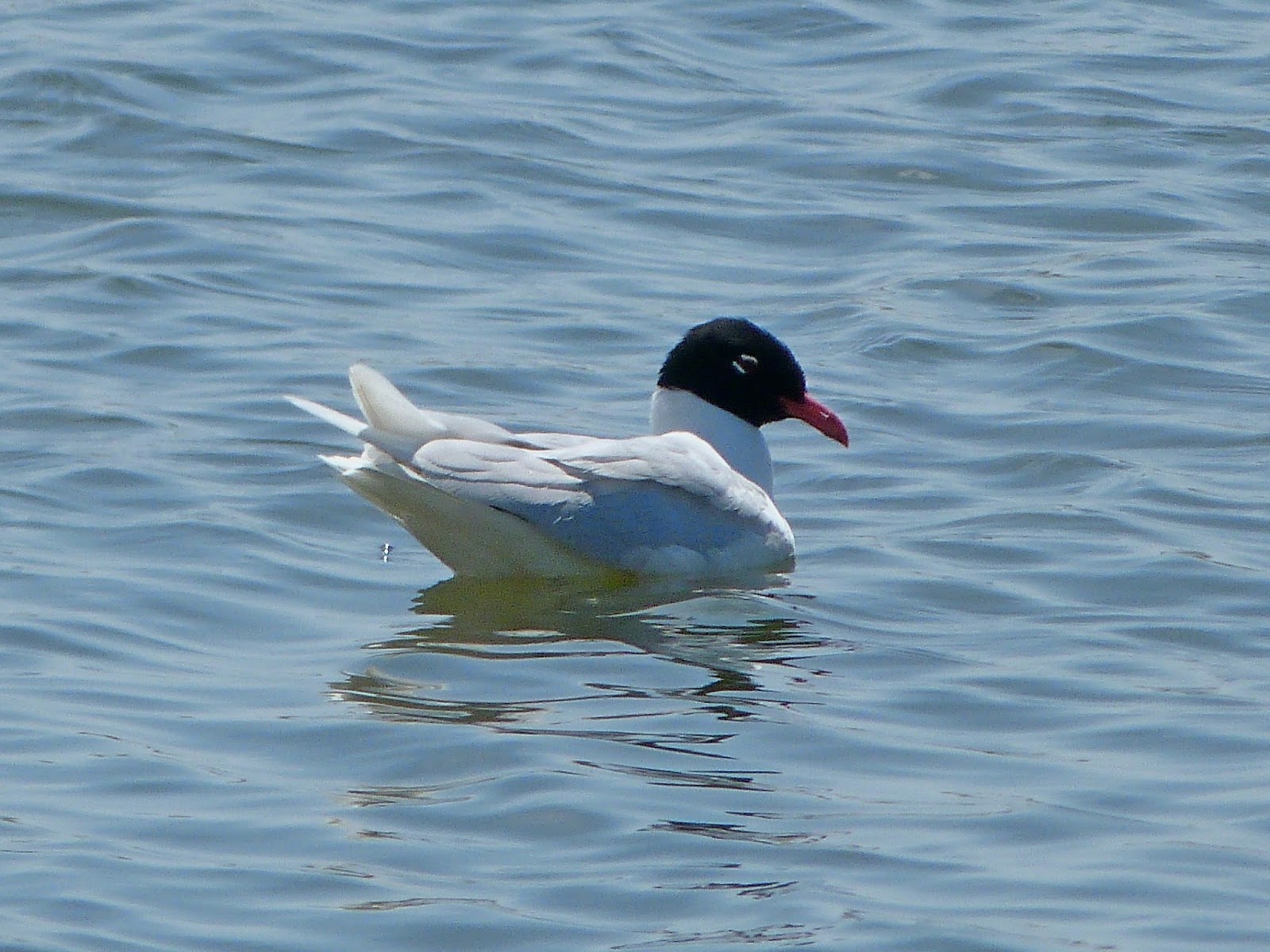
Adult winter Mediterranean Gull
There were no terns.

Raptors...

Noteworthy sightings were of a Red Kite on the 15th; a Hobby on the 6th and a Merlin on the 31st. An adult male and at least two juvenile Marsh Harriers were seen regularly and there were at least two sightings of Peregrines including two together on one date. Sparrowhawks, Buzzards and Kestrels were also seen with some regularity of course. A Short-eared Owl was seen on the 15th and Barn Owl on the 21st, while several Tawny Owls were heard regularly.

Other Non-Passerines...

At least two Kingfishers were seen regularly but the only other species noted in varying non-noteworthy numbers were: 

Feral Pigeon
Stock Dove
Wood Pigeon
Collared Dove
Green Woodpecker and 
Great Spotted Woodpecker.

Passerines...

Lingering summer migrants included at least ten Yellow Wagtails until the 6th; three Wheatears with the last on the 16th; at least one Sand Martin still on the 2nd; House Martins that peaked at one-hundred on the 1st and were last seen on the 16th and Swallows that peaked at two-hundred and fifty on the 15th and were last seen on the 26th. Chiffchaff and Blackcap numbers were relatively poor with no more than ten of each estimated in the grounds at any one time and apart from the aforementioned Yellow-browed Warblers and the ever present Cetti's Warblers, the only other warbler of the month was a latish Reed Warbler on the 15th. 

Incoming winter visitors included the first one of this season's Redwings on the 15th, with others heard regularly later in the month and a flock of over one-hundred Fieldfares that flew north on the 16th. At least one Brambling was present on the 31st and several Lesser Redpolls were seen, or at least heard, with six on the 8th being the largest flock. Siskins however were relatively scarce with flocks of around ten early in the month but then only sporadic singles noted thereafter. 

Goldcrest numbers continued to be very impressive though with estimates in the region of at least fifty in the lower grounds alone in the middle of the month...


One of this month's Goldcrests

It was perhaps not surprising with so many Goldcrests around that a few Firecrests were also seen with singles on six dates from the 15th...


One of the Firecrests...much less cooperative than the Goldcrest!

There was a small but obvious influx of Coal Tits with at least five on some dates but all seen well were of the British race, despite several records of Continental birds elsewhere in the county. Singles of Grey Wagtails and up to three Rock Pipits were regular, while seven  Stonechats on the 12th were the most so far this autumn. 


Male Stonechat

With movements noted elsewhere in the area it seemed only a matter of time before the first Bearded Tits dropped out of the sky, which they duly did on the 15th, with at least five then present to the end of the month.  

Overhead passage of commoner species was fairly unremarkable  with peak counts being eighty Skylarks on the 8th; one-thousand Starlings on the 31st;  fifty plus Linnets on several dates and small numbers of  Meadow Pipits and   Pied Wagtails although there were around thirty of the latter coming in to roost each evening. 

Other species noted in varying but unremarkable numbers were: 

Magpie
Jackdaw
Rook
Carrion Crow
Raven
Blue Tit
Great Tit
Long-tailed Tit
Treecreeper
Wren
Blackbird
Song Thrush
Mistle Thrush
Robin
Dunnock, 
House Sparrow, 
Chaffinch, 
Greenfinch, 
Goldfinch
Bullfinch and 
Reed Bunting.


Female Chaffinch
And that's it for this month except to thank Phill Abbott for the use of his photograph of the Glossy Ibises

Thursday, 15 October 2015

Swannery Bird News - September 2015

Highlights...

Two Cattle Egrets appeared on Shipmoor Point briefly on the 7th ... 

A distant record shot of the two Cattle Egrets (left) with two Little Egrets on Shipmoor Point 
© Charlie Wheeler

...And there were two further brief sightings of a single Cattle Egret on the 26th and 30th. 

Much more cooperative though was the Grey Phalarope which lingered on Meadow Pool from the 15th to the 18th...

The Grey Phalarope

And now the rest of the news... 

Waterfowl...
The drake Scaup was still present all month (although it did occasionally go missing) and a white Mandarin (or Wood Duck?) clearly of captive origin, arrived early in the month and was still present at the month's end... 

The white Mandarin or Wood Duck © Charlie Wheeler

Commoner wildfowl numbers continued to rise and peak counts of wildfowl were: 

Mute Swan 790; 

Black Swan 2; 
Canada Goose 90; 
Mandarin 1;
Shelduck 3; 
Wigeon 250;
Gadwall 6; 
Teal 500;
Mallard 370; 
Pintail 100;
Shoveler 20;
Pochard 50; 
Tufted Duck 150;
Scaup 1.

Other Water Birds... 
Apart from the aforementioned Cattle Egrets there were no noteworthy sightings and peak counts of the commoner species were: 

Cormorant 37; 
Little Egret 6; 
Grey Heron 3;
Great Crested Grebe 32; 
Little Grebe 26;
Moorhen 9; 
Coot 460.

Waders...
In addition to the aforementioned Grey Phalarope, other noteworthy sightings were of a Little Stint also on Meadow Pool from the 12th to the 15th and even rarer in a Swannery context, a Spotted Redshank on the 2nd (the latter frustratingly missed by me!).

The juvenile Little Stint (top left) with Dunlin
And a more heavily cropped shot of the juvenile Little Stint

More expected were Ringed Plover on the 23rd; a Curlew on the 30th; single  Black-tailed Godwits on the 1st and 18th; single Greenshanks on the 12th and 15th and Sanderling on the 15th; while there were regular sightings of Lapwings (with a peak of eight on the 30th)Turnstones (with a peak of five on the 29th); Knots (with peak of four on the 14th); Dunlins (with a peak of eight on the 15th); Common Sandpipers (with a peak of four also on the 15th); Redshanks (with a peak of three on several dates) and Snipe (with a peak of only two on the 21st).

Terns & Gulls...
Two juvenile terns that were either Common Terns or Arctic Terns were glimpsed briefly on the 15th as they headed off west and two Sandwich Terns were present on the 17th...

One of the two Sandwich Terns seen this month

Mediterranean Gulls were regular and peaked at fifty on the 13th; an adult Yellow-legged Gull was present on the 21st while single first-winters were seen on the 5th and 22nd. Only a single Common Gull was noted and no more than singles of Lesser Black-backed Gulls were seen at any one time.

Peak counts of commoner species were:

Black-headed Gull 650;
Herring Gull 50;
Great Black-backed Gull 180.

Raptors... 
At least one Osprey was seen regularly from the 4th to the 29th...

Above two pics are of one of this month's regular Osprey sightings © Charlie Wheeler


... Three juvenile Marsh Harriers were seen on the 1st with singles then regular through the month and an adult male was seen on the 28th and 29th. Single Hobbies were seen on five dates through the month and single Merlins on the 15th and 29th and single Peregrines were regular too as of course were SparrowhawksBuzzards and Kestrels. A few 'heard only' Tawny Owls were the only owls reported.

Other Non-Passerines...
A late Swift was seen on the 6th; whilst at least two Kingfishers were seen regularly. Other species noted in varying numbers were Feral PigeonStock DoveWood PigeonCollared DoveGreen Woodpecker and Great Spotted Woodpecker.

Passerines...
In what is proving to be a very good autumn for Goldcrests there were also at least three Firecrests with one on the 12th and two on the 29th.  It also proved to be a good season for Whinchats with a marked passage from the 1st to the  21st including a peak of ten on the 3rd. As the Whinchats tailed off towards the end of the month Stonechats began to reappear again with a peak of five on several dates, whereas Wheatears were seen throughout with a peak of seven on the 1st. As there were none in the spring the first Spotted Flycatcher of the year was seen on the 5th with another on the 17th. Yellow Wagtails were regular all month but peak counts were of only of around ten.  Swallows however peaked at around a thousand on the 25th with House Martins peaking at only around fifty on the same date and Sand Martins peaking at about ten on several dates. As to be expected Willow Warblers and Chiffchaffs were fairly equal in number early in the month but the former tailed off rapidly later, with the last seen on the 25th. Blackcaps and a few Whitethroats were seen throughout as were several Cetti's Warblers of course but the last Reed and Sedge Warblers were seen on the 17th. Siskins and Meadow Pipits were a fairly constant overhead feature but counts of a hundred plus of each weren't recorded until the end of the month. Linnets and Skylarks were also on the move but in fewer numbers as yet and there was only one Rock Pipit on the 15th. 

Other species noted in varying numbers were MagpieJackdawRook, Carrion CrowRavenBlue TitGreat Tit, Coal TitLong-tailed TitTreecreeperWren, Starling, Blackbird, Song Thrush, Mistle Thrush, Robin, Dunnock, House Sparrow, Grey Wagtail, Pied Wagtail, Chaffinch, Greenfinch, Goldfinch and Reed Bunting.
                              
And that's it for this month except to thank Charlie Wheeler wheeler-photography for the use of the Cattle Egret, Mandarin and Osprey photographs. 


Saturday, 19 September 2015

Swannery Bird News - August 2015

Bird Of The Month - Shag...

Although regular on The East Fleet in winter, the Shag is a scarce bird on the shallow waters of The West Fleet and particularly so in summer, so two together in The Swannery embayment on the 6th is unprecedented... 

One of the two Shags that lingered briefly in the western embayment

And now the rest of the news... 

Waterfowl...
Now Scaup may be a regular wintering species at The Swannery but they're pretty unusual in the summer so the drake that appeared on the 4th and still present on the 31st was noteworthy...

The 'eclipse' plumaged drake Scaup

In addition to the Scaup and following the first returning Teal and Shoveler last month, more fresh in 'winter' wildfowl included the first Pintail on the 22nd and the first three Wigeon on the 23rd. 

The peak counts of wildfowl were: 

Mute Swan 746; 

Black Swan 2; 
Bar-headed Goose 1;
Canada Goose 106; 
Shelduck 8; 
Wigeon 3;
Gadwall 12; 
Teal 13;
Mallard 320; 
Pintail 1;
Shoveler 3;
Pochard 17; 
Tufted Duck 20;
Scaup 1.

Other Water Birds... 

Elsewhere within the parish of Abbotsbury a Black Stork was reported on the 11th in a field at East Bexington before moving to the neighbouring parish of West Bexington. As it was previously seen over Weymouth and Portland and was observed flying west along The Ridgeway it presumably flew within viewing distance of The Swannery but alas I didn't connect if it did. Thankfully though I did connect with one in August 2007.

Peak counts were: 

Shag 2;

Cormorant 30; 
Little Egret 11; 
Grey Heron 4;
Great Crested Grebe 55; 
Little Grebe 10;
Moorhen 10; 
Coot 339.

In addition the first returning Water Rails were regularly heard at the month's end.

Waders...
The breeding Oystercatchers moved on with just the odd single seen, whilst Lapwing peaked at ten. There were singles of both Grey and Golden Plover and Ringed Plover peaked at two. Only two Whimbrels were seen but a few Black-tailed Godwits were noted with a peak of three on the 27th/28th...

Black-tailed Godwit on 'The Bund' on the 26th.

Turnstones peaked at five on the 25th; a Ruff flew east on the 18th; there were sinle Sanderlings on the 3rd and 8th; Dunlin peaked at ten on several dates; Common Sandpipers peaked at a noteworthy twenty on the 16th...


One of this month's Common Sandpipers

Green Sandpipers peaked at five on the 3rd; a couple of Greenshanks were 'heard only' and Redshanks peaked at seven on the 13th but only a couple of Snipe were seen.

Terns & Gulls...
An adult Little Tern and two juveniles were seen on the 14th and the last few Common Terns departed around the same time. No terns were seen at all in the second half of the month. 

Mediterranean Gulls were regular and peaked at twelve on the 14th and at least two juvenile Yellow-legged Gulls was seen regularly later in the month. Up to three Common Gulls were seen including an adult and a juvenile.

Peak counts of commoner species were:

Black-headed Gull 180;
Lesser Black-backed Gull 1,
Herring Gull 25;
Great Black-backed Gull 11.

Mediterranean and Black-headed Gulls on Meadow Pool this month

Raptors... 
A Red Kite flew east on the 11th, a juvenile Marsh Harrier was seen on the 31st and of course a few Sparrowhawks and Buzzards were seen regularly.

A Barn Owl was seen on the 31st, whilst Tawny and even Little Owls were heard regularly.

Hobby was seen on the 11th, single Peregrines were seen on three dates, whilst Kestrels were regular with eight together on the slopes of Chesters Hill on the 6th.

Other Non-Passerines...
A Cuckoo (a juvenile) seen on the 31st was the first of the year as, despite being a relatively recent regular Swannery breeding species, there were none in the spring!  Swifts peaked at a measly five on the 8th and the last (three) were seen on the 25th; whilst one or two Kingfishers were seen regularly, with four on the 16th. Other species noted in varying numbers were Pheasant, Feral Pigeon, Stock Dove, Wood Pigeon, Collared Dove, Green Woodpecker and Great Spotted Woodpecker.

Passerines...
A Firecrest joined the relatively abundant Goldcrests in the tit flock on the 16th as did the first Coal Tit since June on the 28th and the first Nuthatch since March on the 3rd. The hirundine roost held six-hundred Swallows and two-hundred Sand Martins on the 8th, with peak daytime counts of the former of two-hundred on the 11th and fifty on the 20th and peak daytime counts of the latter of fifty on the 11th and 20th; whilst House Martins peaked at ten on the 8th and fifty on the 20th. The first returning Willow Warblers were noted from the 8th but didn't appeared to exceed double figures all month and the two Garden Warblers on the 16th, were the first since May... whilst Chiffchaffs, Blackcaps, Whitethroats and Cetti'sReed and Sedge Warblers were regularly encountered all month of course. The first Starlings since the spring (another lost breeding species) appeared on the 1st and around eighty were roosting by the end of the month. A Pied Flycatcher was present on the 16th and a Redstart on the 31st...


The Redstart (female/1st winter female)

As there were none in the spring, the first Whinchat of the year was seen on the 9th and there were three together on the 28th. The first Wheatear since May was seen on the 17th but there were then regular sightings with a peak of four on the 18th. A Yellow Wagtail on the 8th was also the first since May and there were then regular single figure sightings until a daytime count of forty on the 28th and a roosting peak of one-hundred and eighty on the 31st.  Other species noted in varying numbers were Magpie, Jackdaw, Rook, Raven, Blue Tit, Great Tit, Long-tailed Tit, Treecreeper, WrenBlackbird, Mistle Thrush, Dunnock, House Sparrow, Pied Wagtail, Chaffinch, Greenfinch, Linnet, Goldfinch and Reed Bunting.


One of this month's Ravens © Charlie Wheeler

And that's it for this month except to mention some non-bird wildlife news... the Deaths-head Hawkmoth caterpillar that Jack Oughton found on the 21st...

The Deaths-head Hawkmoth caterpillar © Charlie Wheeler

... and thank Charlie wheeler-photography for the use of the last couple of pics.

Sunday, 23 August 2015

Swannery Birding Highlights - July 2015

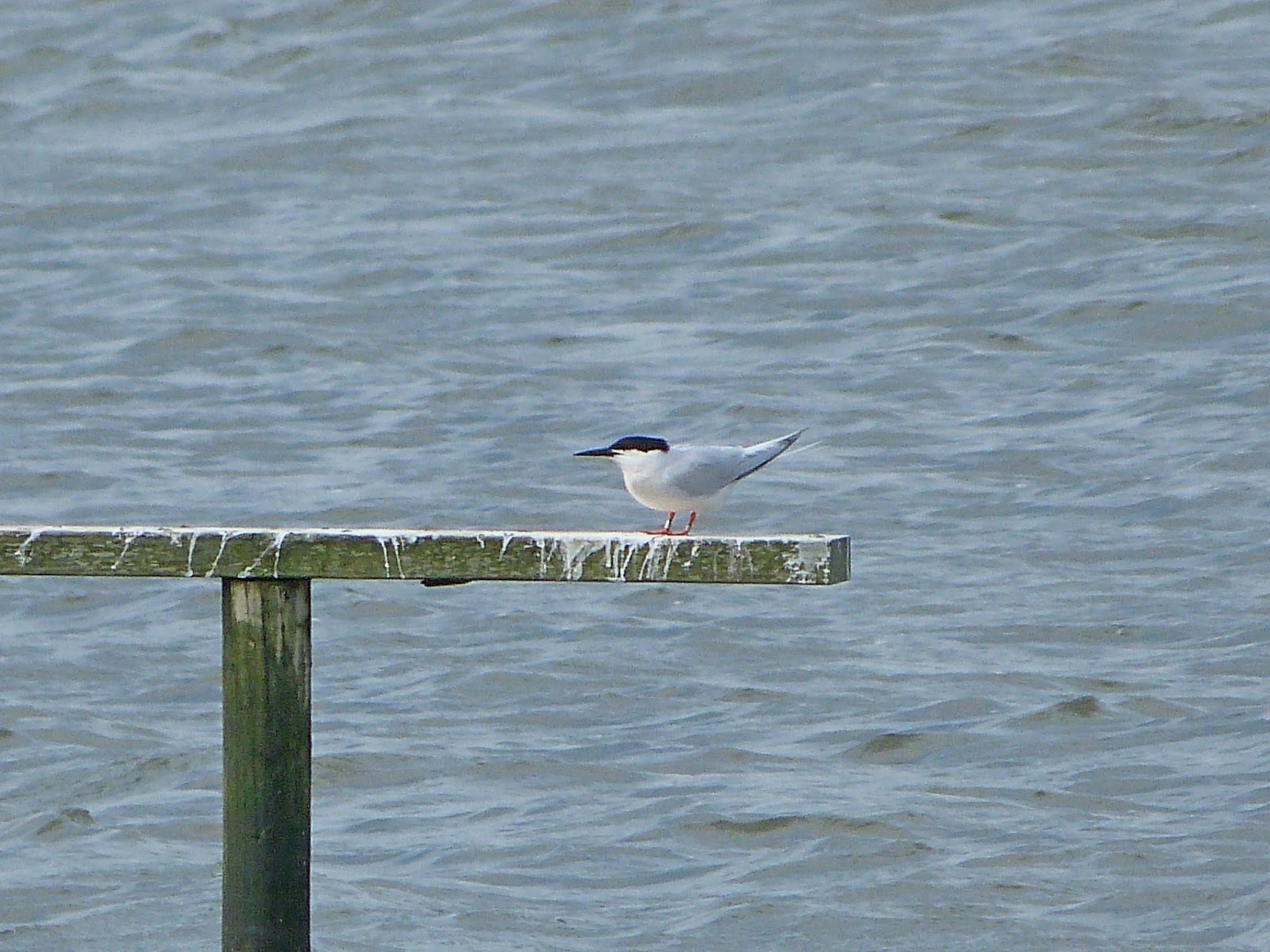
Bird Of The Month - Roseate Tern (again!)...

Following on from last month's single day sighting an adult Roseate Tern was again present for one day around the tern island on the 21st... 

Above two photos - the adult Roseate Tern (21st July 2015)

Just like last month's bird it bore rings on both legs and it may well have been the same individual (although again I was unable to read the rings). 

And now the rest of the news...

Waterfowl...
With no particularly unusual sightings peak counts of the commoner breeding/over-summering wildfowl were: 

Mute Swan 720 (+ 50+ broods); 

Black Swan 2; 
Bar-headed Goose 1;
Canada Goose 690 (+ 1 brood); 
Shelduck 16 (+ 3 broods); 
Gadwall 2; 
Teal 1;
Mallard 253 (+ 50+ broods); 
Shoveler 4;
Pochard 1; 
Tufted Duck 37 (+ 1 brood).

Other Water Birds... 
What would have been the highlight of this category, if confirmed, was the Bittern reported in flight briefly on the 25th but as it was not seen again the title falls to a juvenile Gannet keeping company with the swans on the 1st...


Above two shots the Gannet (in company with a Mute Swan - top).
Aged as a juvenile primarily by the white spots on upperwing and back


Peak counts of the commoner species were: 

Cormorant 23; 
Little Egret 13; 
Grey Heron 2;
Great Crested Grebe 60; 
Little Grebe 7;
Moorhen 10 (+ 5+ broods); 
Coot 306 (+ 5+ broods)
Kingfisher 1.

Waders...
Of the  two pairs of nesting Oystercatcher, the ones in the grounds fledged one of their two young, whereas the pair from the Tern Island laid a replacement clutch but failed again. With no extras seen five was the peak count.

The nearly fledged Oystercatcher with one of it's parents

No other wader species bred but post breeding dispersal and early return migration meant that there were quite a nice selection of other waders noted... Lapwing peaked at seven; single Whimbrels were seen on the 3rd and 30th...


One of the Whimbrel on Meadow Pool

Curlew was seen on the 7th; Black-tailed Godwits were noted on three dates with a peak of five on the 17th, a Turnstone lingered from the 23rd to the 26th; a Knot appeared on the 24th; as did a Sanderling on the 26th; Dunlin peaked at fifty on the 27th...


Two of the one-hundred or so Dunlin seen this month.

Common Sandpiper peaked at 4 on the 16th and there were two Green Sandpipers on the 21st and again on the 31st...


One of this month's four Green Sandpipers.

There were two Greenshanks on the 6th, with further singles on the 17th and 26th and Redshank peaked at three on the 1st.  

Terns & Gulls...
The fifty or so pairs of Common Terns on the Tern Island began fledging their young and it is believed that around one-hundred and five are set to fledge in total this year...


Common Tern with 'Whitebait'. There certainly doesn't seem to have been a shortage of food this year!
One of this year's Common Tern fledglings

A few non-breeding Sandwich Terns continued to be seen but the 'Eastern-type' Common Tern that has been visiting the tern island for the last few seasons was only seen briefly on a couple of dates mid-month...

The 'Eastern-type' Common Tern photographed last summer.

There were quite a few Mediterranean Gulls seen, culminating in a peak of twenty plus for several days mid-month, which included many juveniles and at least one juvenile Yellow-legged Gull was seen regularly. 


Above two pics a pair of Mediterranean Gulls in company with a Black-headed Gull, Common Terns & a Pied Wagtail.

Common Gull was rather unseasonally seen on the 17th, otherwise there were just varying single to double  figure counts of Black-headed Gull,  Lesser Black-backed GullHerring Gull and Great Black-backed Gull .

Raptors... 
Hobby was noted on the 1st and at least one juvenile Marsh Harrier was seen regularly late in the month (whilst an unaged bird was seen on the 9th). Unlike last month there were several Peregrine sightings but the only other raptors seen were the usual BuzzardsSparrowhawks and Kestrels, whilst yet again the local Tawny Owls were regularly heard if not seen.

Passerines etc...
A flock of around ten, presumably local breeding, Swifts were seen regularly in the first half of the month at least and were joined by similar numbers of (again local breeding?)  Swallows and House Martins. At times though there were also up to fifty (non-local breeding) Sand Martins. The only other passerines to make the notebook were Siskin, with an unseasonal flock of twenty on the 3rd and a few Stonechats and a Bullfinch neither of which bred on the patch this year, though unlike the Siskins, did no doubt do so nearby.


One of up to four Ravens that were regularly seen this month.

And that's it for this month except to say sorry yet again for the late post (almost a month behind still!) but my laptop is behaving a little better now so  I shall endeavour to post my August more promptly!


Thursday, 30 July 2015

Swannery Birding Highlights - June 2015

Bird Of The Month - Roseate Tern...

An adult Roseate Tern was present around the tern island on the 11th... 


Above two images the adult Roseate Tern present on the 11th June

The photos don't really do it justice as in some lights it was very pink but as you can see in others rather grey! It bore two rings but neither could be read. It was first found around 9.30 in the morning and was still present at around 6.45 in the evening. What may well have been the same bird was then seen around two hours later flying east through Christchurch Harbour.

And now the rest of the news...

Waterfowl...
Unseasonal ducks included singles of Teal on the 16th and 26th and a Wigeon on the 9th...

The drake Wigeon

Apart from the usual hybrids the only oddities in the moulting feral goose flock were up to three Bar-headed Geese. Peak counts of the commoner breeding/over-summering wildfowl were: 

Mute Swan 640; 

Black Swan 2; 
Canada Goose 690; 
Shelduck 34; 
Gadwall 14; 
Mallard 254; 
Pochard 6; 
Tufted Duck 32.

Other Water Birds... 
The first returning Kingfisher was noted on the 26th and the first returning Little Grebe on the 27th. Peak counts of the commoner species were: 

Cormorant 30; 
Little Egret 11; 
Grey Heron 5; 
Great Crested Grebe 48; 
Moorhen 6; 
Coot 92. 

Waders...
Of the  two pairs of Oystercatcher nesting, the ones in the grounds hatched two young, whereas the pair on the Tern Island failed, no doubt due to the aggressive behaviour of the terns. After a lonely spring the single Lapwing was joined by another on the 10th and the post breeding 'flock' had reached four by the month's end.  


Lapwing

Single Curlew were seen or heard on three dates, whilst a single Bar-tailed Godwit lingered from the 1st to the 8th... 

Above two images the Bar-tailed Godwit

In company with two Redshank, the first returning Green Sandpiper was seen on the 23rd... 

Above two images the Green Sandpiper

... followed the next day by the first returning Common Sandpiper 

Skuas, Terns & Gulls...
rather unusual occurrence, not least because they are less than annual at The Swannery, were the two Arctic Skuas that flew over the Chesil and across the Fleet before heading off inland on the 1st. Almost as scarce here now were the two Little Terns seen on the 28th, with one (or another) again on the 30th.... 

One of this month's Little Terns

The fifty or so pairs of Common Terns on the Tern Island began hatching their young and a few non-breeding Sandwich Terns continued to be seen.

At least one first summer Common Tern hung around the colony again.

There were a few Mediterranean Gulls seen, culminating in a peak of three at the month's end...


 One of this month's Mediterranean Gulls an adult summer

Otherwise there were just single figure counts of Black-headed Gull,  Lesser Black-backed GullHerring Gull and Great Black-backed Gull . 

Raptors... 
Hobby was noted on the 3rd and 8th and a Red Kite flew over on the 9th. Our former resident male Marsh Harrier made another brief return visit on the 10th but the only other raptors seen were the usual BuzzardsSparrowhawks and Kestrels, while the local Tawny Owls were vociferous as ever.

Other Land-birds...
Over fifty Swifts flew north-west on the 27th but otherwise only ten or so were found in the feeding flock of local breeders alongside similar numbers of Swallows and House Martins. At the very end of the month these were joined by the first few returning Sand Martins too. The only other passerines to make the notebook were all species that having been absent in the spring began to return to The Swannery after breeding in the very near vicinity. This post-breeding dispersal involved Mistle Thrush, Grey Wagtail, Coal Tit, Meadow Pipit and Stonechat.
The original pair of Swallows in Helen Hide laid a second clutch whilst a second pair built a nest in The Fleet Pipe Hide & this is one of them!

And that's it for this month except to say sorry once again for the late post (a month behind still!) but my laptop is still kaput and the only other means I have to blog is using The Swannery PC and I don't get much time at work to do this! I shall endeavour to post my July sightings asap however!