Please note that this is my own personal blog and therefore the views and opinions expressed, although in no way intended to be controversial, are not necessarily those shared by my employers Abbotsbury Tourism Ltd. and Ilchester Estates . All photos are © Steve Groves unless otherwise credited.


Sunday, 8 September 2013

The Return Of The 'Peep'...

Swannery Birding Highlights Of The Week...

Monday 2nd to Sunday 8th September 2013.......

The Semipalmated Sandpiper returns...

So yes the highlight of the week was the return of the 'Semi-p' on Wednesday after it's two day sojourn to Brownsea Island...


Above two 'pics' the juvenile Semipalmated Sandpiper on meadow pool this week and below the latter shot more heavily cropped...


Indeed the little 'peep' seems to have had 'itchy wings' since it's trans-Atlantic arrival, as it now seems that it was present at the other end of The Fleet at Ferrybridge in the early afternoon of Sunday the 1st before it turned up at The Swannery. In fact it seems it may well have been present there in the morning too. It now also appears to have been seen back at Ferrybridge in the early evening (after it left Abbotsbury) prior to it's late evening sighting back at Abbotsbury. Although hand on heart the latter sighting at The Swannery was extremely distant so it may have been erroneous. Either way it then did a moonlight flit to Poole Harbour before it showed up on my patch again on Wednesday (and I even identified it correctly this time!). I wasn't the only one to have had problems with it's 'id' though as it wasn't initially correctly called at any of the above sites hence the confusion over it's exact movements.
The 'Semipalmated Peep'.
For the benefit of my non-birder readers 'Peeps' are what American birders call the smaller calidris sandpipers.

It could be quite flighty at times and in fact after it was first seen early on Thursday it went missing for several hours. On Friday it journeyed even further, turning up in Hampshire at Keyhaven/Pennington Marshes and was still there to Saturday at least.

Other Waders...

The exposed mud in the meadow was quite a draw for other calidris Sandpipers too with a peak count of forty plus Dunlins and between two and five Curlew Sandpipers from Tuesday to Friday, along with two Knots on the latter day too.
Juvenile Curlew Sandpiper (top) with two juvenile Dunlins.
Two of the at least five Juvenile Curlew Sandpipers in the meadow this week.

One of Friday's two juvenile Knots.
At least three Ringed Plovers and three Little Ringed Plovers also graced the meadow along with six Lapwings, three Black-tailed Godwits, a Green Sandpiper and five Snipe.
 

One of the three juvenile Little Ringed Plovers.

The Fleet shoreline though was more attractive to the remaining wader species with peaks of one Oystercatcher, four Common Sandpipers and four Greenshanks.
This Common Sandpiper though was in the meadow.

Gulls & Terns...

The only notable gulls were a single juvenile Yellow-legged and a few Mediterranean and the only terns seen at all were a couple of Sandwich.

One of this week's Mediterranean Gulls (a first winter).

Wildfowl...

There was little change to this weeks number and variety of wildfowl although new in was a juvenile Goosander (as last week's individual was a drake in 'eclipse').
The juvenile/first winter Goosander.

Raptors...

The second best bird of the week after the Semi-p was a Honey Buzzard, although feasibly with one sighting at around eight in the morning and a second in the evening it could be that two birds were involved. I managed to miss both, which was a shame, as I have only seen this species on three previous occasions at the Swannery. The only Marsh Harrier I connected with this week was a juvenile while the only other 'BOP' of note was a lingering Osprey.
Workmate Charlie and I fixed a downed bough to the end of a stock fence near Shipmoor Point in the hope of attracting the Osprey and within an hour...success!

Passerines...

Passerine passage still seems a bit slow as yet. Yellow Wagtails were still roosting in good numbers though, with a few White and presumed first winter Blue-headed along with the usual Pied of course. See Steve Hales' blog abbotsburyswanneryringing. A couple of Tree Pipits were the first for a couple of weeks and a few Meadow Pipits were  no doubt the vanguard of larger movements to come. Only a few Wheatears were seen along with a couple of Whinchats and at last the first Spotted Flycatchers of the autumn were reported (although I only saw one). Warbler numbers though were rather unimpressive...are there still more to come?

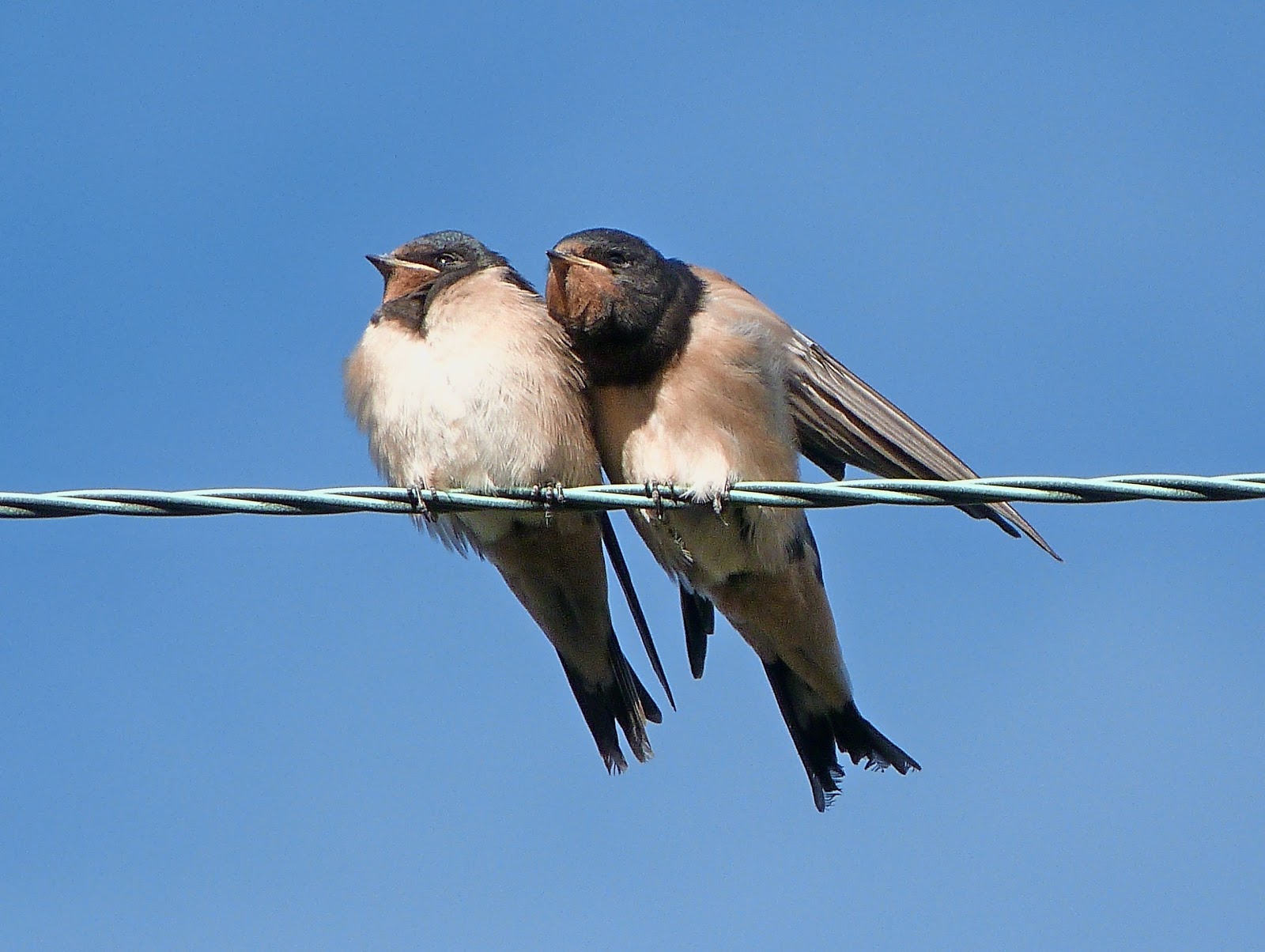
Just two of a number of Swallows (these are juveniles) moving through this week along with both House and Sand Martins. Still no impressive numbers as yet though.

Monday, 2 September 2013

'You Win Some, You Lose Some' - Two New Swannery Birds

Swannery Birding Highlights Of The Week...

Monday 26th August to Sunday 1st September 2013.......

Semipalmated Sandpiper...

I wasn't working this weekend but popped down to The Swannery a couple of times on Saturday and in the late afternoon on Sunday. Before my latter visit I had already virtually completed a draft for this weeks post and on it had bemoaned the lack of any juvenile Wood Sandpipers or Little Stints so far this autumn. It was ironic therefore that one of the first birds I saw when I reached Helen Hide was a juvenile Wood Sandpiper on The Fleet shoreline near the tank traps. I then made my way via the Fleet Pipe Hide to the Meadow Hide and was equally surprised to see two 'Little Stints' gracing the pool in front of me. Some changes were going to be necessary to my draft post! It was partly for this reason along with following events that made me so late with my eventual post this week as I had to virtually start from scratch again!

The two 'Little Stints' (or not!).
As you can see from the above photo one of the birds was noticeably duller and less well marked than the other and so instantly thoughts of Semipalmated Sandpiper came to mind. One thing I remembered from my 'Collins Guide' was that 'Semi-ps' are supposed to be slightly bigger and stockier than Little Stint and that did not seem to be the case here. When the pair flew a short distance onto mud I tried to pick out any palmations on the duller bird but with its feet coated in mud it was a thankless task. It was then that I began to think I was just being 'stringy' and that the bird was far more likely to be a Little Stint than a 'Semi-P' and that perhaps its dullness was down to it being an adult and that was how I left it. Thankfully though I had my trusty Lumix and rattled off several photos of the pair. It was not until the evening when I was uploading the pics to my laptop that alarm bells began ringing. Checking the literature it was beginning to dawn on me that the dull bird was seemingly a juvenile too with all fresh feathers and if it was a juv. then it either had to be a very drab Little Stint or a 'Semi-P' after all! To be on the safe side I emailed a pic to Brett Spencer and gave him a ring to sound him out expecting him to tell me it was just a Little Stint but no... he quickly came to the conclusion that it was The Swannery's first Semipalmated Sandpiper! By this time the light was threatening to wane so instead of heading all the way out to the Meadow Hide I drove out along New Barn Road to scope the meadow pool from the roadside. There were a few more waders present than there had been earlier but I was sure I could make out, from the considerable distance, two smaller birds among the thirty or so Dunlin and Ringed Plover, so believed that the bird was still in situ. The following morning however despite the presence of some of the other waders both the sandpiper and the stint had gone! If accepted by the BBRC this will be the first record for The Swannery of this American 'peep' but the third for The Fleet and the sixth for Dorset. My thanks go to Brett for enabling me to clinch my 262nd Swannery bird!

The Juvenile Semipalmated Sandpiper.
The juv. Semipalmated Sandpiper and Little Stint.
The Semipalmated Sandpiper.
Despite heavy cropping it still appears impossible to make out the features it is named for.

Citrine Wagtail...

On Thursday evening, ringers Steve Hales and Luke Phillips were attending the wagtail roost on 'Bum Point', as they do most suitable autumn evenings. Most of the roosting birds are Yellow Wagtails but there are also good numbers of Pieds (and by late autumn the latter predominate of course). Amongst the Yellows and Pieds there are often a few apparent Blue-headed Wagtails and a few Whites, as was indeed the case this week. The birds usually gather on the beach opposite, around the land shore  of The Fleet or specifically on the tern island before dropping down into the reed bed. It was while glancing through the throng of birds on the tern island from Helen Hide that Luke picked out a first winter Citrine Wagtail standing out distinctively among the Yellows and Pieds. He only watched it for a few seconds however before all the birds took to the air. Needless to say the bird was not trapped or seen again. I was at The Swannery that evening but unfortunately I had gone out to Meadow Hide to checkout the wagtails and waders on and around the pool and decided not to bother Steve and Luke, out at Bum Point, as I knew they would be busy ringing. In fact by the time of the sighting, as the light was just beginning to wane, I was probably already on my way home... Doh! Up until now I have been very lucky never to have missed, or at least not seen retrospectively (or in birder-speak 'gripped back'),  a single bird species that has been confirmed as being seen within The Swannery recording area during my twenty-five year tenure. Lets hope I 'grip' this one back very soon! If accepted by the BBRC this record will constitute the first for The Swannery and The Fleet and will only be the fourth for Dorset with the most recent being an adult male at Lodmoor RSPB in May 2009.

And now for the rest of the weeks news...

Wildfowl...

A few more Wigeon and Pintail arrived joining the Gadwall, Teal and Shoveler (not to mention the Mallard and few remaining Shelduck), while a few more Tufted Duck and Pochard were also in evidence. The duck of the week however was a Goosander found by work colleague Charlotte on the Decoy Pond. Unfortunately it was my day off and although I popped down later it had long gone.


One of this autumns first Pintails on meadow pool.
The two Black Swans remain with the Mute Swan herd and the Barnacle Goose and two Bar-headed Geese still linger with the Canada Goose flock (along with the usual hybrids).


Waders...

I have already mentioned the three headline waders this week, namely the Semipalmated Sandpiper, Little Stint and Wood Sandpiper but peak counts of the other species were... Oystercatcher - one; Golden Plover - one; Lapwing - six; Little Ringed Plover - one; Ringed Plover - twenty plus; Curlew - two; Black-tailed Godwit - eight; Bar-tailed Godwit - one; Sanderling - one; Dunlin - twenty plus; Common Sandpiper - seven plus; Green Sandpiper - two; Greenshank - eleven; Redshank - six and Snipe - four.


Little Ringed Plover in the meadow.
......

Juvenile Black-tailed Godwit beginning to moult into winter plumage (meadow pool).

Two Green Sandpipers (meadow pool).

Gulls, Terns & Petrels...

A Fulmar overflew The Fleet and I at last managed to clinch my first juvenile Yellow-legged Gull of the autumn but apart from the now expected smatter of Mediterranean Gulls there was no other gulls of note and disappointingly not a single tern!

Raptors...

Both the regular male and female Marsh Harriers were around but in addition three juveniles were seen together on Friday, perhaps the Weymouth birds? There were also a few sightings of at least one Osprey...


A rather distant Osprey by the tank traps.


Passerines...

The headline passerine was of course the aforementioned Citrine Wagtail with it's supporting cast of up to a thousand roosting 'Yellow Wags' including a few apparent 'Blue-headed Wags' and 'White Wags'. Also noteworthy as neither bred at The Swannery this year was the reappearance of one or two Goldcrests and Stonechats - the first since early spring whereas a couple of Whinchats were the first of the autumn too. One or two Redstarts and groups of up to ten Wheatears continued to move through too but no flycatchers (in fact there has been no 'Spotflys' at all so far this autumn). Willow Warblers were by far the most numerous of their ilk, indeed the only other warblers seen could theoretically (though perhaps unlikely to) have all been local birds rather than on passage considering the numbers and species involved.

Wheatear from meadow Hide.
Lets hope passerine passage shifts up a gear soon with maybe another Citrine Wagtail!

Monday, 26 August 2013

August WeBS

Swannery Birding Highlights Of The Week...

Monday 19th to Sunday 25th August 2013.......


Wildfowl...

Results of Sunday's Wetland Bird Survey at The Swannery re wildfowl were as follows...

Mute Swan - 620
Black Swan - 2
Canada Goose - 520
Barnacle Goose - 1
Shelduck - 6
Teal - 145
Mallard - 457
Shoveler - 2
Pochard - 7
Tufted Duck - 37

In addition the two Bar-headed Geese were around most of the week and there were at least four Gadwall mid-week. Sunday afternoon however, after the count was done and dusted, the first twenty odd Pintail and first eight Wigeon of the autumn arrived...


One of the first Wigeon of the autumn, an 'eclipse' male, sleeping after it's long journey.


Other water Birds...

The WeBS results for other miscellaneous water birds were...

Little Grebe - 6
Great Crested Grebe - 36
Cormorant - 16
Little Egret - 7
Grey Heron - 1
Moorhen - 5
Coot - 330


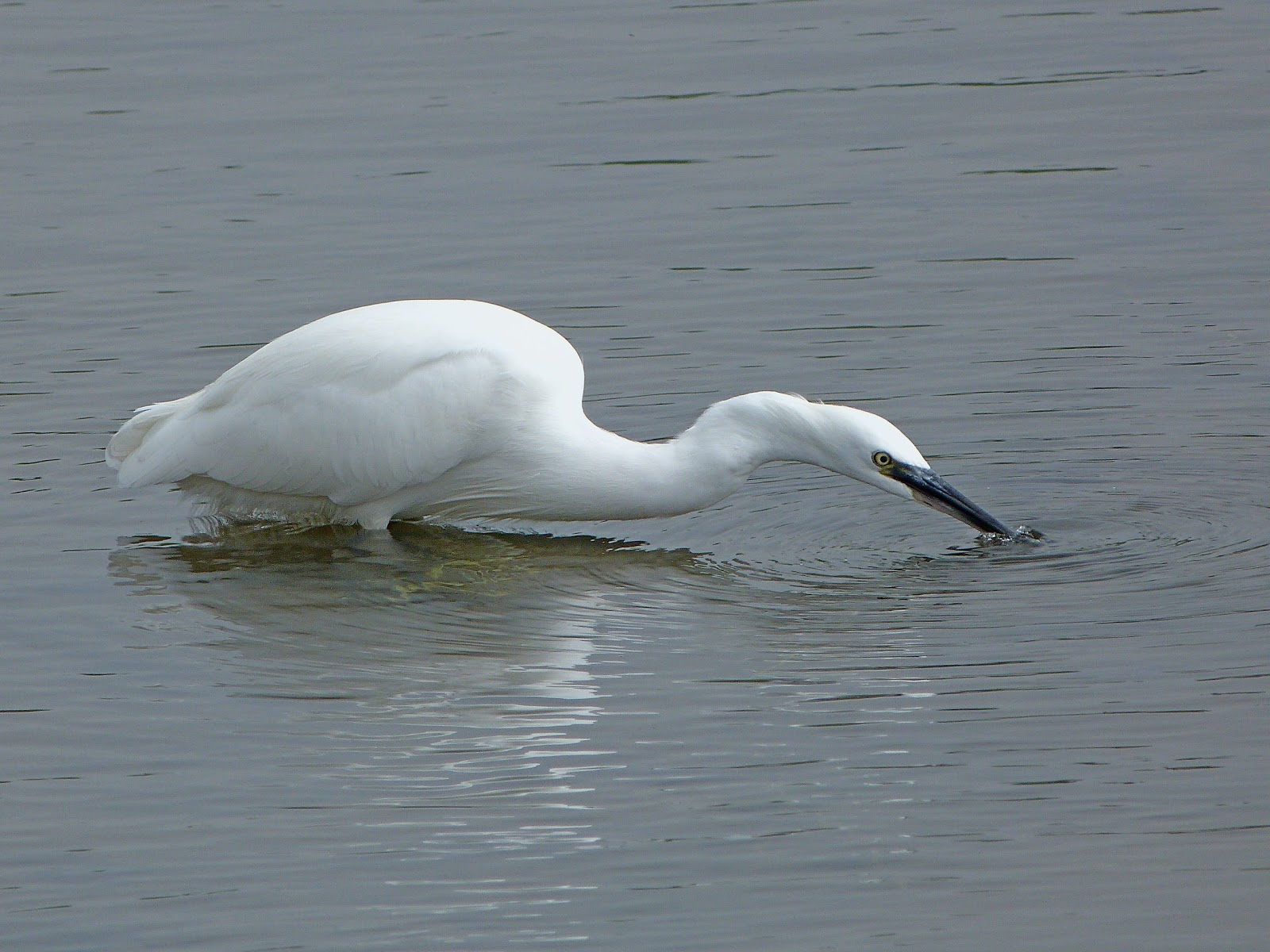
Little Egret fishing. 
I have often seen them frozen in this pose but never realised until I watched this individual that they actually vibrate their bill on the water's surface to attract prey, much as they vibrate their toes in the mud on the bottom!


Juvenile Grey Heron taking a more direct approach to fishing.
© Charlie Wheeler wheeler-photography

Waders...

As the WeBS results for waders were less representative of the week, below are the week's peak counts...

Oystercatcher - 1
Lapwing - 6
Ringed Plover - 1
Dunlin - 7
Snipe - 2
Bar-tailed Godwit - 1
Black-tailed Godwit - 4
Whimbrel - 1
Common Sandpiper - 5
Green Sandpiper - 6
Greenshank - 6
Redshank - 5

This week's two Snipe.

Two juvenile Black-tailed Godwits.

A 'Blackwit' with an itch!

Three of the week's Common Sandpipers © Charlie Wheeler wheeler-photography ...

And three of the week's Green Sandpipers.

Gulls & Terns...

The WeBS results for gulls and terns were...

Black-headed Gull - 201
Lesser Black-backed Gull - 1
Herring Gull - 12
Great Black-backed Gull - 32

The last Common Tern chicks fledged mid-week and all adults and chicks alike had departed by the weekend. There were no other tern species seen but there were one or two Mediterranean Gulls most days.


Raptors

The highlight this week was the appearance of the first Osprey of the autumn but there were also sporadic sightings of our regular male and female Marsh Harriers.


Migrant Passerines...

Firsts of the autumn included two or three each of Tree Pipit and Redstart, while single figures of Yellow Wagtails continued to be seen or at least heard daily. There was only one Wheatear however and a check of the Swallow roost mid-week produced around thirty along with thirty Sand Martins (thanks Steve). With local bred warblers still in evidence the only obvious passage birds were a trickle of Willows and Sedges...


Willow Warbler.


Sedge Warbler.

A Couple Of Swannery Insects...

A rather worn Silver-washed Fritillary
Having only ever seen a handful at The Swannery over the years, it was a pleasant surprise to have several individuals visiting the Buddleia outside the Swannery Shop this summer (nice find Judy!). Constantly dipping on these however I was pleased to see this individual on the Buddleia by our 'Mess Hut' (nice find Charlie!).


Vapourer Moth caterpillar © Charlie Wheeler wheeler-photography
Thanks as always to Charlie for the use of three of the above pics.


Sunday, 18 August 2013

'Déjà vu (trios Guifette noire)?'

Swannery Birding Highlights Of The Week...


Monday 12th to Sunday 18th August 2013...


No it wasn't my brain playing tricks today... I apparently really did miss three Black Terns for the second time in just over a month! I saw the report late morning on the RBA website and having done a thorough round of the hides just before and found nothing of note, I was rather bemused. We also hadn't had any birders in as far as I was aware. Then I remembered that while I was cutting the overflow car park earlier, I had seen the regular two Sunday morning birders scoping the meadow and embayment from New Barn Road, so it was they, presumably, that saw the terns while I was otherwise engaged.

Last month's three Black Terns that I also dipped on by minutes.
© Charlie Wheeler.wheeler-photography

It was a pity I missed the terns as there was little else of note in the week...
 

Wildfowl...

Nothing 'new in' to report... The variety and numbers of duck were basically the same as last week, while the feral goose flock, although dispersing now that their moult is complete, still contained a couple of Bar-headed Geese and the Barnacle Goose...
Two of the four Bar-headed Geese remain, along with the Barnacle Goose...

The Bar-headed Geese often keep close company with two Domestic x Canada Goose hybrids.


The three surviving Tufted Duck'lings' from our only brood this year.
 
While on the subject of Diving Ducks it looks like my hybrid from last week may have been just a pure Pochard after all... In my defence I have just never seen such a young juvenile before, they're usually well on the way to first winter when they arrive... Whoops!


Waders...

This group were again a bit more inspiring than the former... The odd Oystercatcher was around; a few Lapwings lingered; there were two Ringed Plovers (on Tuesday); a single Whimbrel (today); a few Black-tailed Godwits including the first juvenile of the year...
The first of this year's juvenile Black-tailed Godwits (apparently of the race islandica).
...also one or two Sanderlings; several Dunlins...

One of this week's Dunlins, a juvenile.
... Common Sandpipers were seen daily, with at least seven on Tuesday...

One of this week's Common Sandpipers.
... Green Sandpipers reached three on a couple of days; whereas Greenshanks peaked at six...

Greenshank in the meadow, now that the water level has dropped.
... Redshanks peaked at ten and one or two Snipe were seen most days.

Gulls & Terns...

Apart from the aforementioned Black Terns there was little to write home about... There was still around fifty Common Terns in evidence, including one or two late unfledged young, whilst the only gulls of any note were Mediterraneans, with single figures most days.
 

Other Water Birds...

A Kingfisher was unusually the first since June and much less expected, on the landward side of the beach, were singles of Gannet over The Fleet and Fulmar over Chapel Hill!


Passerines...

A rather quiet week for this category although having missed the Black Terns a Pied Flycatcher was most definitely my bird of the week. The only other obvious migrants, excepting those that bred in the near vicinity, were a few Willow Warblers, several Wheatears, fewer Sand Martins than of late and only one or two fly-over and heard only, Yellow Wagtails.


'Pishing' (yes pishing) by a stand of reed produced this Reed Warbler. If the winds had only been south-easterly we could have been looking at an Aquatic Warbler. Ah well there's still time!

Sunday, 11 August 2013

'Holiday And Highwater'

Swannery Birding Highlights Of The Week...


Monday 5th to Sunday 11th August 2013.......

I was on leave all week but despite day trips out and long overdue chores I still managed to pop down to the patch most evenings. Inexplicably, in my absence,  the water-levels in the meadow steadily rose all week, something I will have to remedy on my return tomorrow. Even so, the sole patch of remaining mud in the meadow on Monday held a Little Ringed Plover but for the rest of the week the deep water meant that the only waders able to feed (up to their bellies at that) were Black-tailed Godwits, with three on Friday and a single yesterday and today (all Icelandic birds). There was however still a good selection of waders either on The Fleet shoreline or flying over, with single figures of Lapwing, Dunlin, Common Sandpiper, Redshank and Greenshank, most days, with the latter reaching nine on Friday! There were also three Sanderling on Monday and at least four Green Sandpiper on Tuesday along with two Curlew, a Whimbrel and a Snipe.


One of this week's Common Sandpipers on Bum Point.

While the meadow pool's depth was not ideal for waders it did attract returning dabbling ducks, with Teal exceeding thirty and Shoveler up to ten. Gadwall however dropped to around five and as yet there have been no Wigeon, Pintail or Garganey but at least in the case of the first two (and hopefully the last) it should only be a matter of time!

All the usual gull species were present including the odd slightly unseasonal Common and several Mediterranean but I have yet to clinch the first Yellow-legged of the season. There were again good numbers of Common Terns with both fledged and even a few unfledged young still and the few Sandwich Terns included the first juvenile of the year...


Although The Chesil has historically held breeding Little, Common and even a few Arctic and Roseate Terns there has never been a confirmed record of nesting Sandwich Terns so this juvenile (above two photos) obviously fledged no nearer than Poole Harbour.

Migrant passerines included the first returning Willow Warblers, with a small fall on Tuesday (and a few later in the week) and the first Wheatears, with single figures most days. Also, despite the continued presence of breeding Chiffchaffs, Blackcaps, Reed Warblers, Sedge Warblers, and Whitethroats, there did seem to be a small influx of the latter two species at least. Swallow numbers increased too, overtaking those of Sand Martin for the first time this 'autumn', with around one hundred and twenty of the former and twenty of the latter in the roost on Tuesday (thanks Steve). Oddly though three Yellow Wagtails over this evening were the first of the week.

The only raptor of note was the regular male Marsh Harrier...

'Our' practically resident male Marsh Harrier looking more like a mature male with every sighting. What was probably 'our' female flew over my car at nearby Swyre in the week too.
The only other bird (arguably) of note was the male Lady Amherst's Pheasant that reappeared after a couple of weeks (perhaps having returned to the Subtropical Gardens in the meantime).

So it is back to work tomorrow which means, ironically, more time in the field, so with potentially more returning birds over the next few weeks.... watch this space!


An evening scene at The Swannery this week.